
A practical model for turning plans into execution.
A goal is not a plan. A plan is not progress until people understand it, build the skills, and carry it through the work.
The SADE model gives managers a clear way to connect all four.

Operating principles
Seven practical ideas keep improvement, goals, people, skills, and execution connected.
Parts of SADE
Strategy, Alignment, Development, and Execution create the shared path.
Seven principles that keep the work connected.
Improvement needs a complete system
Sustained improvement connects the vision, goal, team, processes, performance standard, and training.
A model keeps people aligned
A shared model helps people see how daily work connects to the result the organization wants.
The goal anchors the plan
A goal needs a real plan, team involvement, and the skills required to carry it out.
Strategy becomes daily action
Everyday tasks should move the chosen strategy toward a clear outcome.
Team development drives business success
Find the skill gaps and build practical training that helps people perform the work better.
Execution is built inside the team
Performance problems do not improve when employee development is postponed or avoided.
Quality expectations predict execution
Set a clear standard for the work and protect it through coaching, accountability, and continued development.
Use SADE where the work is getting stuck.
The model can support a sales goal, onboarding system, retention problem, service standard, productivity push, or leadership-development need.
The point is not to add another layer of language. It is to give managers and employees one clear way to understand what the goal requires from them.
Sustained improvement
The model keeps attention on value that survives after the initial push.
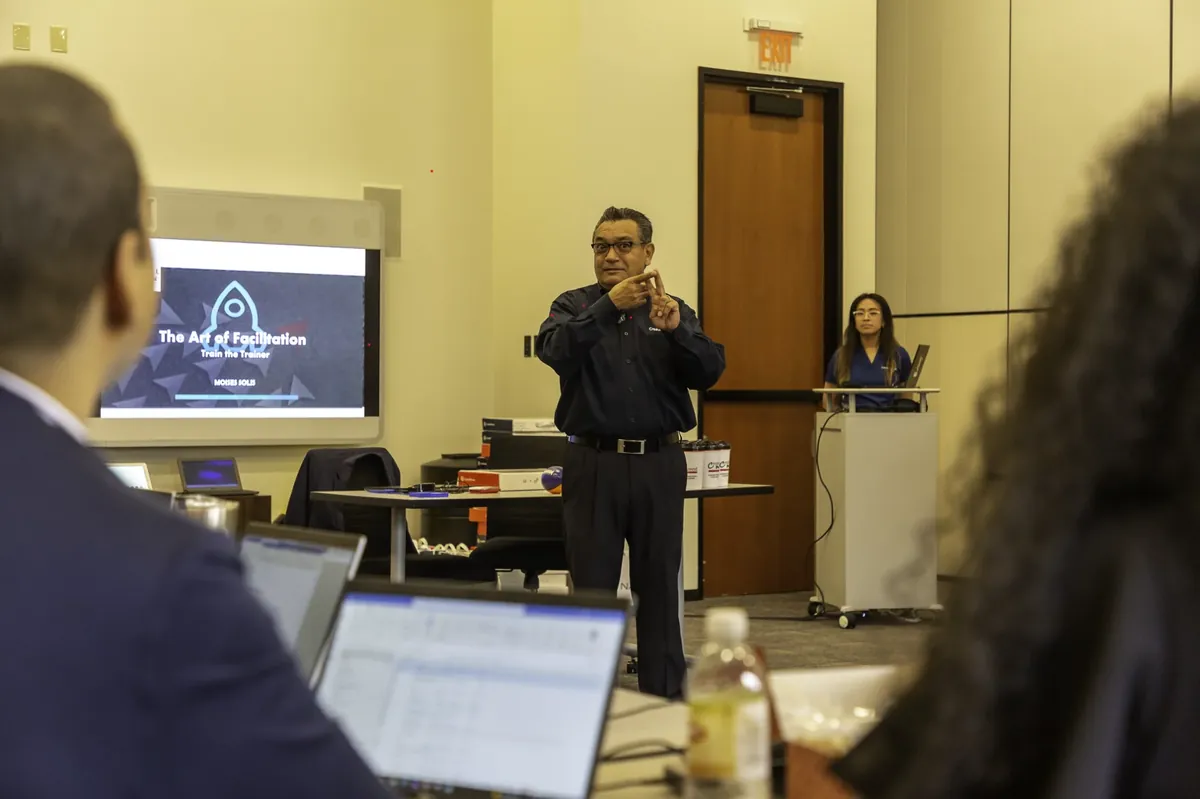
Discuss your team’s goalThis structured approach with its simple strategies and visual techniques maintained my team’s interest, inspired fresh thinking, and drove the change needed to meet and beat our goals.
Questions leaders ask before they start.
Clear answers make the next decision easier.
What does SADE stand for?
SADE stands for Strategy, Alignment, Development, and Execution. The four parts connect the business goal to the people, skills, and follow-through needed to reach it.
Is SADE only for training departments?
No. It is an operating model for leaders and teams. Training is one important part because people need the right skills to execute the strategy.
Can SADE be used for one urgent problem?
Yes. The model can help organize one clear priority and can expand as the organization builds a stronger development and execution system.
Bring one important goal into the model.
We will help your leadership team see what needs strategy, alignment, development, and stronger execution.
Book a Free Discovery Call